Stucco looks solid, so it's natural to assume you can hit it with a pressure washer when it gets dirty. That's one of the most expensive mistakes a building owner can make. The short answer to "can you pressure wash stucco?" is that you shouldn't, at least not with high pressure. Here's why, and what to do instead.
What Stucco and EIFS Actually Are
Traditional stucco is a cement-based plaster, usually made from cement, sand, lime and water, applied in layers over a wall and finished with a texture. It's common on commercial buildings, downtown storefronts and some homes because it's durable and gives a clean, seamless look.
EIFS, short for Exterior Insulation and Finish System and often called synthetic stucco, looks similar from the street but is built very differently. It's a thin, flexible finish coat over a layer of foam insulation board. It's lighter and more energy-efficient, but the finish is much thinner and easier to damage than traditional stucco.
Why Stucco Is Porous and Fragile
Stucco is full of tiny pores, and its textured surface has countless small peaks and valleys. That porosity lets it breathe, but it also means water, dirt and organic material soak in rather than sitting on top. Most stucco walls also develop hairline cracks as the building settles and goes through freeze-thaw cycles, and they include control joints and edges that are thinner and weaker than the flat wall.
In other words, the very features that give stucco its look are the places where high pressure does the most harm.
The Damage High Pressure Can Cause
- Gouging and etching: a concentrated stream can carve lines and blotches into the textured finish.
- Chipped edges and corners: trim bands, corners and control joints can chip or crumble.
- Wider cracks: water driven into hairline cracks can widen them over time.
- Water behind the wall: pressure can force water through cracks and joints into the wall, where it can lead to hidden moisture damage.
- Damage to EIFS: high pressure can dent, puncture or loosen the thin finish coat and the foam behind it.
- Uneven appearance: spots that were blasted harder can look lighter or rougher than the rest of the wall.
Why Algae, Mold and Dirt Embed in Stucco
Because stucco is porous and textured, it holds moisture longer than smooth surfaces. Algae and mold spores carried on the wind settle into the texture and grow there, especially on north-facing walls, shaded areas and below trim bands, ledges and window sills where water runs down. Dirt and pollen get trapped along with them.
That's why pressure washing often disappoints even before it causes damage. It can knock off the growth on the surface, but the spores deep in the texture survive and the stains return quickly.
How Soft Washing Works, and Why It Lasts Longer
Soft washing uses low pressure, similar to a garden hose, combined with a professional cleaning solution. The solution is applied to the stucco and given time to dwell so it soaks into the texture and kills the algae and mold spores embedded in the surface. Then the wall is rinsed gently.
Since the growth is killed rather than just scraped off, there's much less left to regrow. That's why soft washing typically lasts longer than pressure washing on stucco. A careful soft wash also includes protecting windows, doors, signs, landscaping and nearby vehicles. For a broader comparison of the two methods, read Pressure Washing vs. Soft Washing.
A Real Example: SBM Office Supply & Technology
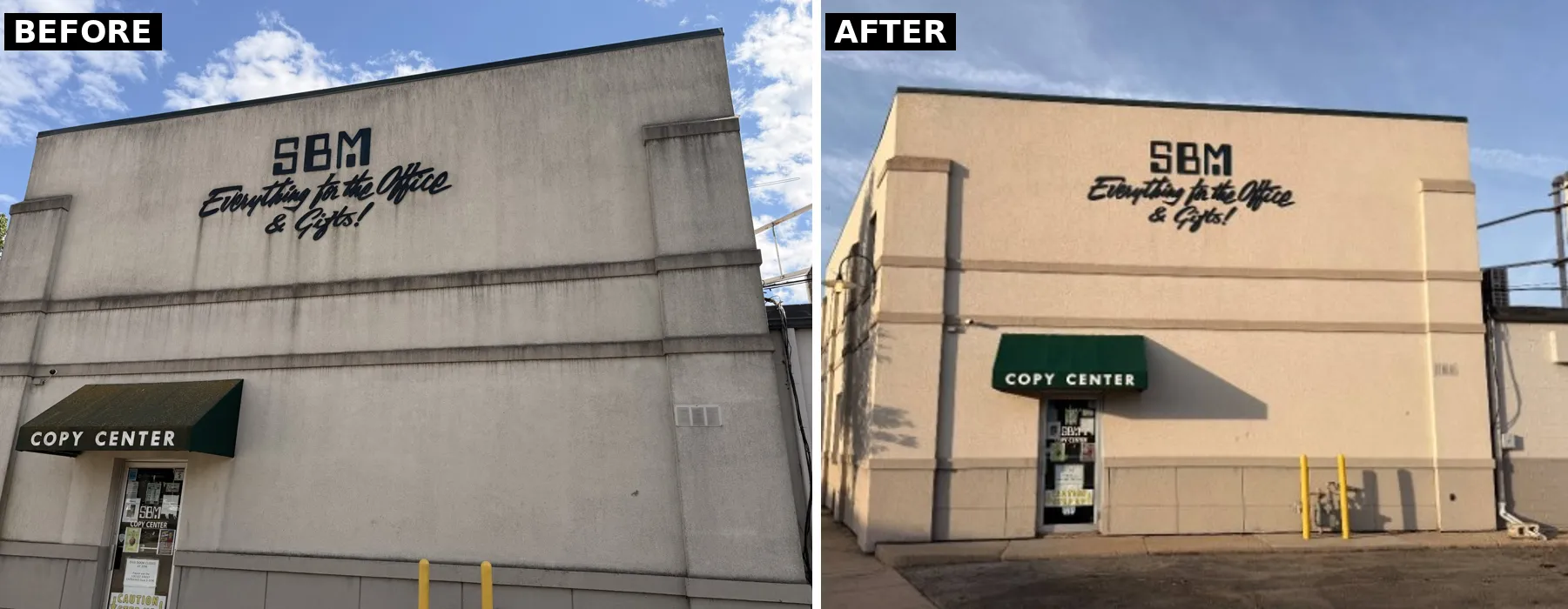
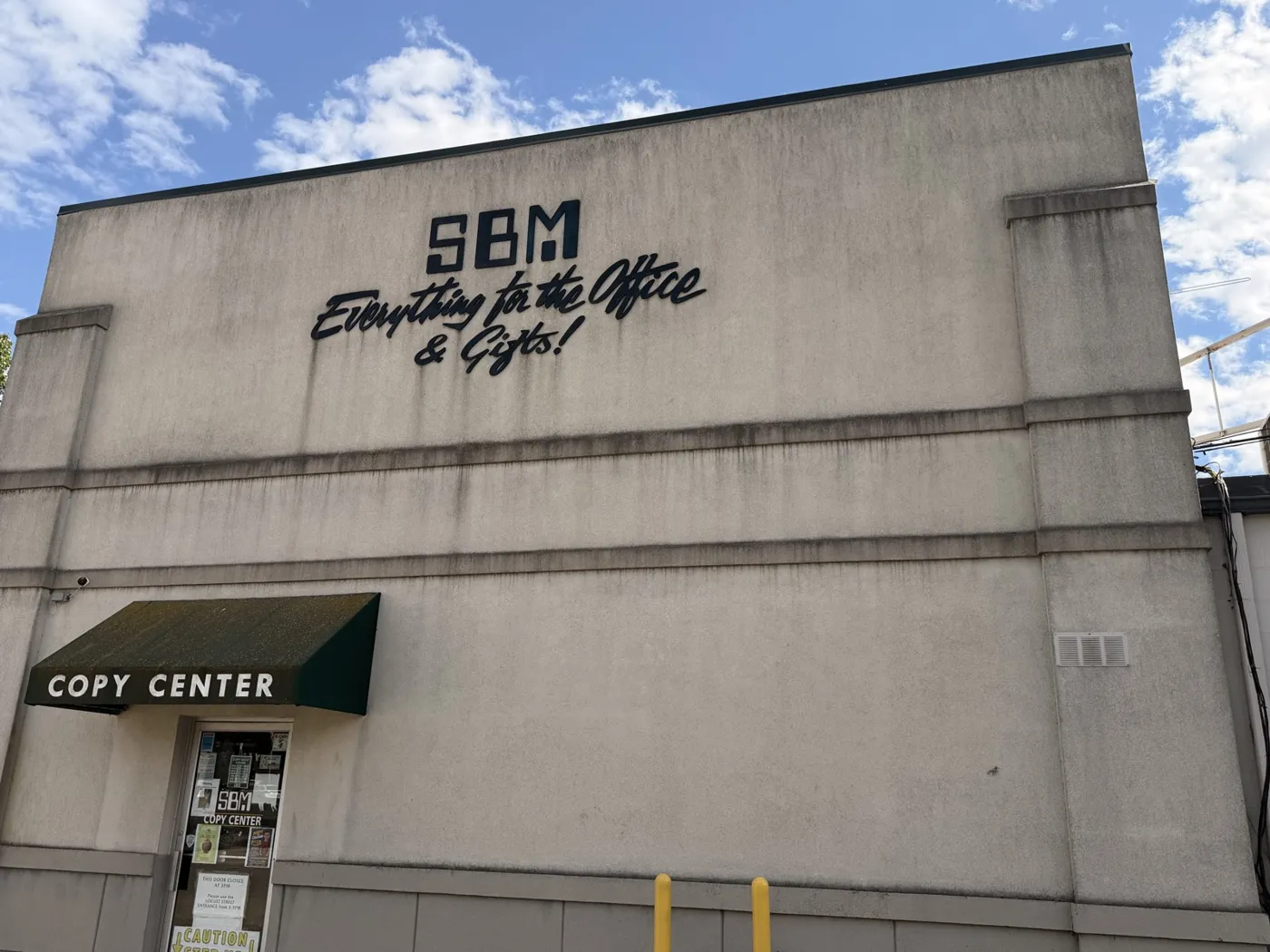
In downtown Sterling, SBM Office Supply & Technology's two-story stucco building had algae and dark staining soaked into the texture and streaking down from the trim bands, plus heavy growth on the storefront awning. Pressure washing would have risked chipping the trim bands and forcing water behind the wall. We soft washed the building and awning at low pressure instead. See the full SBM commercial stucco soft wash case study.
Stucco vs. Other Commercial Surfaces
Most commercial buildings aren't all one material, so a good cleaning plan treats each surface differently. Stucco and EIFS walls, painted trim, signs and awnings get a low-pressure soft wash. Brick and block in good condition can usually handle a bit more pressure, but old or soft mortar still calls for a gentle approach. Concrete sidewalks, entries, dumpster pads and parking areas are the surfaces that can be pressure washed or cleaned with a surface cleaner.
That's why "pressure washing" is really a family of methods. When you hire a company to clean a stucco building, it's worth asking how they'll handle each surface. If the answer is the same high-pressure wand for everything, that's a warning sign.
What to Ask Before Hiring a Stucco Cleaning Company
- Will you soft wash the stucco, or use high pressure?
- How do you protect windows, doors, signs, landscaping and vehicles?
- Do you check for cracks, loose stucco or EIFS before you start?
- Can you work before or after business hours?
- What results should I realistically expect on old or deep stains?
The Risks of DIY Stucco Cleaning
Rental pressure washers make it tempting to tackle stucco yourself, but they're the main source of the damage described above. Even a "low" setting can be too strong when the nozzle is held close to the wall. Ladders and two-story walls add safety risks, and mixing cleaning solutions incorrectly can harm plants, stain surfaces or leave streaks.
If you clean a small area yourself, use a garden hose, a soft brush and a cleaner made for stucco, work from the bottom up, rinse from the top down and keep plants wet. For whole walls, upper stories or EIFS, a professional soft wash is the safer choice.
How Often to Clean Stucco in Northern Illinois
Humid summers, freeze-thaw winters, shade trees and road dust all affect how quickly stucco gets dirty. Most stucco buildings in the Sauk Valley benefit from a soft wash every one to two years. Busy storefronts, restaurants and shaded or north-facing walls may need cleaning yearly, while sunny, open walls can often go longer. Businesses that want a consistently clean look often set up a recurring maintenance schedule.
Signs Your Stucco Needs Cleaning
- Dark streaks running down from trim bands, ledges, windows or the roofline.
- Green, gray or black patches, especially on shaded or north-facing walls.
- A dull, uneven color across walls that used to look bright.
- Growth around signs, awnings or light fixtures.
- Dirt splashed up along the bottom of the wall near sidewalks or landscaping.
When to Call a Pro
Call a professional when the staining covers large areas, reaches the second story, or when you're not sure whether your building is traditional stucco or EIFS. It's also worth calling before a grand opening, a sale or lease, or a busy season when first impressions matter. Rock River Home & RV soft washes stucco and EIFS buildings in Sterling, Rock Falls and across the Sauk Valley. Learn more about our commercial pressure washing and building soft washing, or call 779-251-9133 for a free quote.