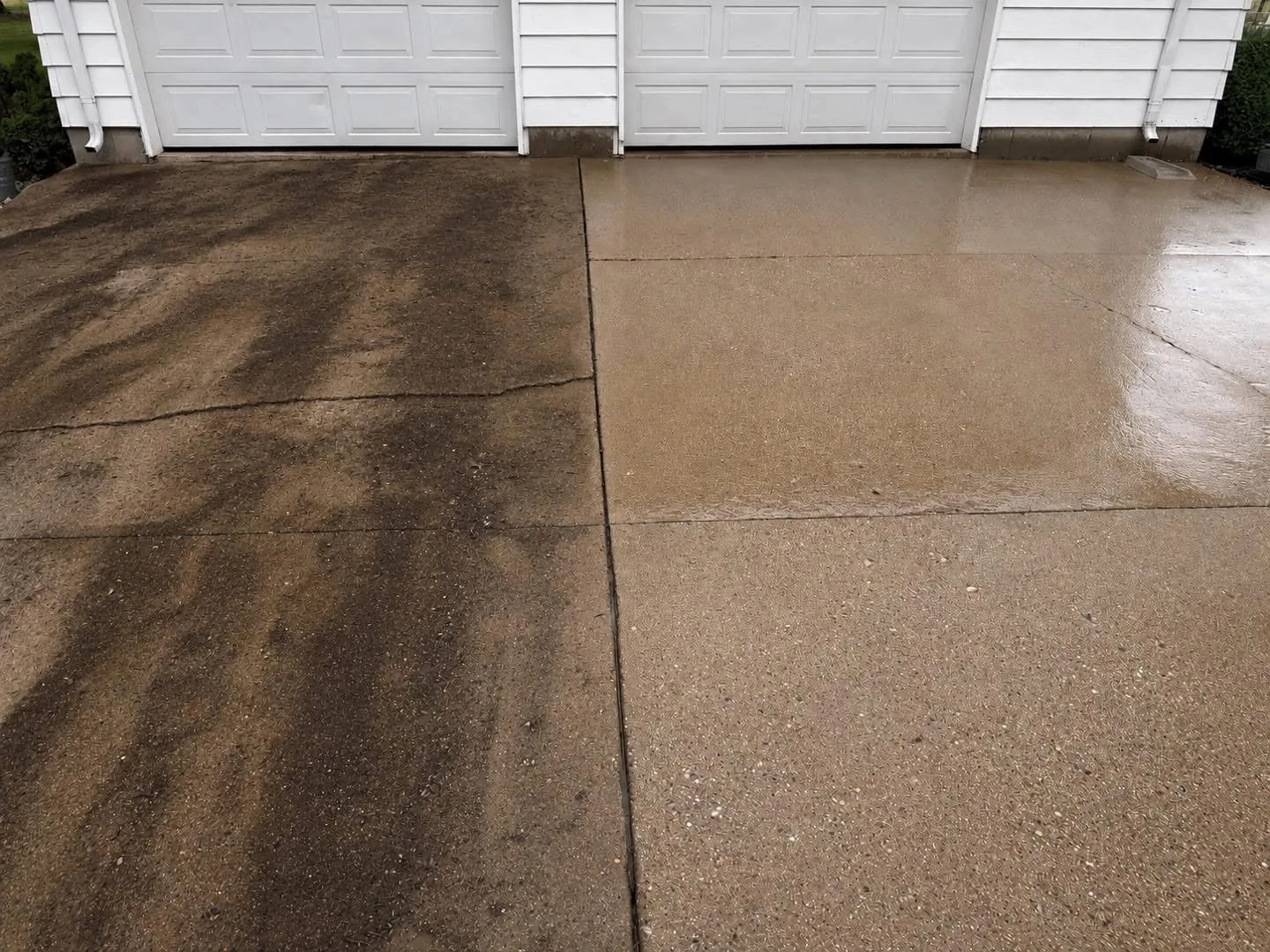
Let's start with the honest answer most articles dance around: there is no universal schedule for cleaning a driveway. How often yours needs attention depends on how it's used, where it sits, and what it's made of — not a one-size number.
That said, you don't have to guess. This guide walks through the real factors that set your cadence, how the approach differs across concrete, pavers, and asphalt, and the practical signs that tell you it's time — so you can plan a schedule that actually fits your driveway.
Want a recommendation for your specific driveway? Call Rock River Home & RV any day of the week at 779-251-9133 for a free estimate.
Why There's No One-Size Cleaning Interval
You'll see "once a year" or "every six months" repeated all over the internet, but those numbers treat every driveway the same — and they aren't. A shaded, tree-lined driveway that catches heavy plow salt has completely different needs than an open, sunny one with light use. Rather than a fixed calendar, think about what actually drives buildup on your surface.
The Factors That Set Your Cadence
When we help a homeowner plan, these are the things that matter far more than a generic interval:
- Traffic and vehicle use — more coming and going means more tire film and drips
- Shade and moisture exposure — damp, shaded areas grow algae faster
- Drainage — spots where water pools stay dirtier and slicker longer
- Nearby trees and leaf debris — sap, pollen, and leaf tannins add staining
- Winter salt and roadway residue — heavy plow-spray areas collect more
- Stains — oil, rust, tire marks, fertilizer, and tannins each behave differently
- Surface material — concrete, pavers, and asphalt clean differently
- Surface age and condition — newer, older, or worn surfaces need different care
- Existing sealers or coatings — these change the right approach
- Manufacturer or installer guidance — especially for pavers, coatings, and new work
If several point toward heavy exposure, plan on cleaning more often. If your driveway is open, sunny, and lightly used, you can comfortably stretch the interval.
Flexible Starting Points (Not Rules)
People still want somewhere to start, so treat these as loose starting points to adjust — not fixed prescriptions:
- Lightly used, open, sunny driveways: an occasional cleaning as buildup becomes visible
- Average suburban driveways: a periodic reset, often timed to spring after winter salt
- Heavy-salt, shaded, tree-lined, or high-traffic driveways: more frequent attention, with spot treatment of fresh stains in between
The surface itself will tell you more than any calendar. When you can see salt film, spreading stains, or organic growth, it's time — regardless of the date.
Concrete, Pavers, and Asphalt Clean Differently
Concrete
The most common driveway surface here. It handles a controlled cleaning well, but technique still matters to clean evenly and protect joints and edges. Newer concrete and any sealer or coating change the approach (more below).
Pavers & Stamped/Decorative Concrete
Joints and textures trap grit and leaf tannins, so these need a measured approach that cleans without disturbing jointing sand or marring the pattern. Follow your installer's or manufacturer's guidance for sealed and decorative surfaces.
Asphalt
Asphalt hides some grime but still benefits from a gentle, even cleaning. It calls for a lighter touch than concrete so the surface isn't damaged. We match the method to the material rather than blasting everything the same way.
New, Sealed, Damaged, and Repaired Surfaces
Some driveways need extra consideration before any cleaning:
- New concrete: needs time to cure; we follow installer/manufacturer timelines and stay gentle
- Sealed or coated concrete: the coating dictates the approach, so we work to preserve it
- Exposed aggregate: the textured surface holds debris and is cleaned carefully to protect the finish
- Stamped/decorative concrete: cleaned to protect the pattern and any sealer
- Joints and cracks: cleaned around thoughtfully to avoid driving water where it shouldn't go
- Spalling and worn areas: handled gently — cleaning does not repair them
- Previously repaired areas: patches and prior treatments may respond differently and are approached with care
Stains: Fresh vs. Old
Oil, rust, tire marks, fertilizer, and leaf tannins are all common, and cleaning can reduce and improve many of them — but complete removal isn't guaranteed. Timing matters: a fresh oil drip usually responds far better than a stain that has absorbed deep into the surface over months or been treated before. If you catch a spill early, it's worth addressing sooner rather than waiting for the next full cleaning.
What Cleaning Is — and Isn't
It's important to keep expectations grounded. Driveway cleaning is a surface service, and it is separate from:
- Concrete repair and crack repair
- Sealing and resurfacing
- Drainage correction
- Asphalt repair
Cleaning does not fix cracks, reverse spalling, prevent freeze-thaw deterioration, restore structural integrity, or correct drainage. It gets the surface clean and looking its best — the repairs and sealing are separate work best handled by the appropriate specialist.
Signs Your Driveway Is Ready for Cleaning
- White, chalky salt film after winter that won't rinse away
- Dark blotches under parked vehicles that keep growing
- Green or black organic growth on the shaded side after wet stretches
- Tire paths that remain after a garden-hose rinse
- Leaf outlines or tannin staining near the lawn edge
- A general dinginess before you plan to seal or host guests
Several of these together usually mean it's a good time for a professional cleaning.
Timing Around Northern Illinois Weather
Across Northern Illinois and Eastern Iowa, spring is a natural reset once the hard freezes have passed and most winter salt is gone — a good time to clear buildup before summer bakes stains in. A later-season cleaning helps clear leaf tannins and organic growth before winter. If you're planning to seal, schedule cleaning well ahead so the surface is dry and ready.
Conditions vary by property, too. A shaded driveway in Oregon or Dixon may grow algae faster than an open lot in Rock Falls, while homes toward Rockford, Belvidere, Garden Prairie, Morrison, Mount Carroll, or across the river in Moline, Davenport, and Clinton each see their own mix of salt, dust, and shade. We tailor the plan to your driveway and where it sits — see where we work on our service areas page.
Curb Appeal and Whole-Home Care
A clean driveway ties your walks, steps, and entry together and keeps the front of your home looking sharp. We'll keep it honest, though — this is about appearance and upkeep, not a promise of increased property value. Many homeowners bundle driveway work with other exterior cleaning; if you're weighing doing it yourself, our guide on why DIY driveway cleaning often costs more than hiring professionals is worth a read, and our spring driveway and sidewalk checklist helps with seasonal prep. For the bigger picture on cleaning methods, see pressure washing vs. soft washing.
Frequently Asked Questions
How often should I pressure wash my driveway?
There's no universal answer. The right frequency depends on how much traffic the driveway sees, how shaded and damp it stays, drainage, nearby trees, winter salt exposure, the stains it collects, and the surface material, age, and condition. Some driveways look great with an occasional cleaning; others in heavy-salt or shaded, tree-lined spots benefit from more frequent attention. A quick look at your surface is the best guide.
Is annual driveway cleaning necessary for every property?
No. A once-a-year rhythm works for some homes, but it isn't a rule. An open, sunny driveway with light use may go longer between cleanings, while one that collects heavy salt, oil drips, or organic growth may want more frequent care. Use the condition of the surface — not the calendar alone — to decide.
Can pressure washing completely remove old oil or rust stains?
Not always. Cleaning can reduce and improve many oil, rust, tire, fertilizer, and leaf-tannin stains, but complete removal isn't guaranteed. Fresh spills usually respond better than older stains that have absorbed deep into the surface or been treated before. We'll give you an honest read on what's realistic for your driveway.
Can asphalt and paver driveways be professionally cleaned?
Yes, but each material is handled differently than a standard concrete slab. Pavers and stamped or decorative concrete have joints and textures that need a measured approach, and asphalt calls for gentler, even cleaning. We match the method to the material rather than treating everything the same.
How soon can new concrete be cleaned?
New concrete needs time to cure before aggressive cleaning, and any sealer or coating has its own timeline. We follow the guidance of your installer or the product manufacturer and take a gentle approach on newer surfaces rather than rushing them.
Does driveway cleaning fix cracks or spalling?
No. Cleaning is separate from repair. It does not fix cracks, reverse spalling, prevent freeze-thaw deterioration, restore structural integrity, or correct drainage. Those need proper concrete or asphalt repair, sealing, resurfacing, or drainage work — cleaning simply gets the surface clean.
Can algae, oil, or wet buildup make a driveway slick?
Algae, oil, and lingering wet buildup can make some areas feel slick, especially in shaded spots or where water pools. Cleaning can help reduce that buildup, but we won't promise a guaranteed safety improvement — footing depends on many factors beyond a wash.
Let's Find the Right Schedule for Your Driveway
Instead of guessing from a generic interval, let us take a quick look at your driveway, its surface, and how you use it, and we'll suggest a realistic cadence. Review what's included on our driveway and sidewalk cleaning service page, or browse more guides in our detailing articles.
Call 779-251-9133 to plan your driveway cleaning across Sterling and Northern Illinois.