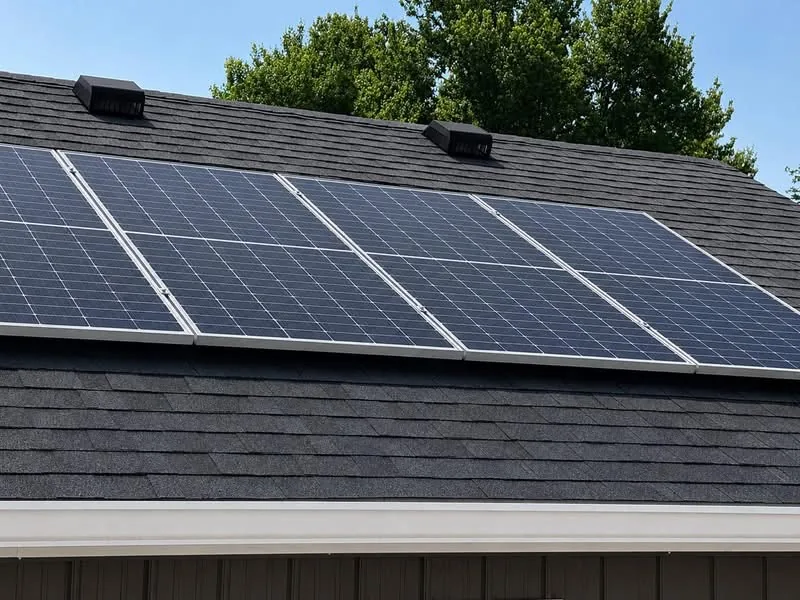
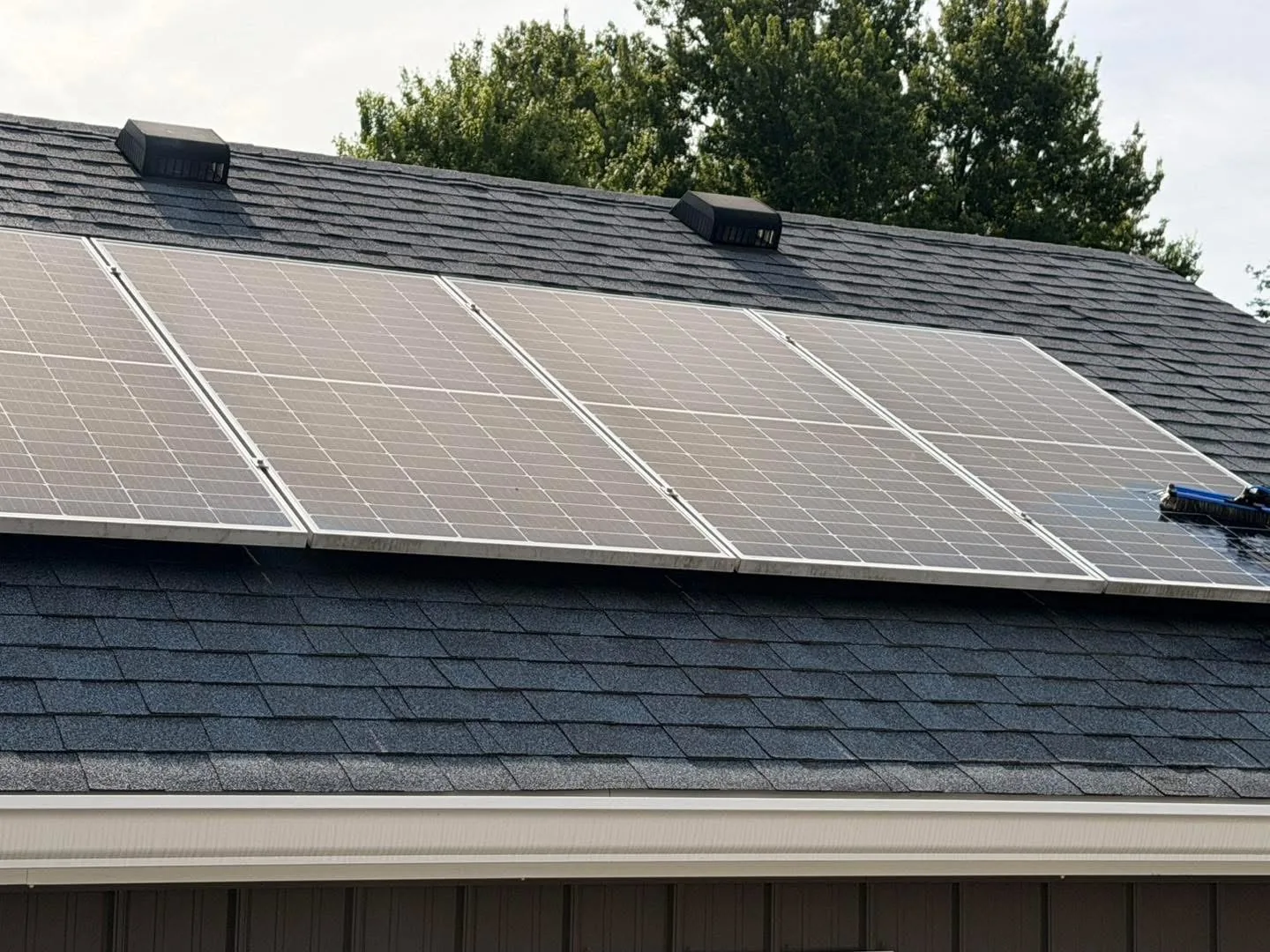
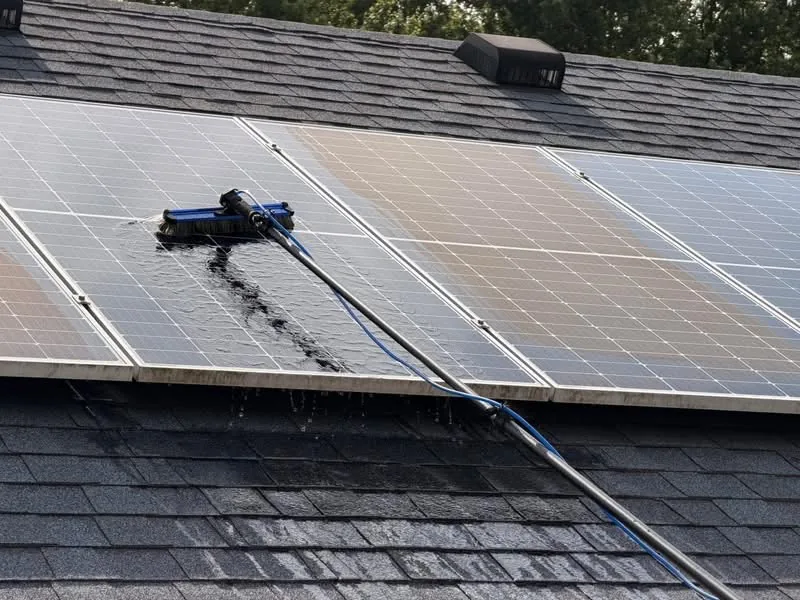
If you've invested in a solar array, you've probably wondered whether those panels ever need cleaning — and, if so, who you should trust to do it. Searching "solar panel cleaning near me" usually turns up a mix of window cleaners, pressure-washing companies, and specialists, and it isn't always clear who actually understands solar. This guide is here to help you sort it out and make a safe, informed decision.
We'll cover what collects on panels in our region, whether rain really keeps them clean, how soiling can affect the light reaching your panels, why panels should never be treated like siding or concrete, and the questions worth asking before you hire. We'll also be clear about where cleaning ends and where your installer or a qualified solar professional should take over.
If you'd like to talk through your system, you can reach Rock River Home & RV any day of the week at 779-251-9133 to ask about solar panel cleaning.
What Collects on Solar Panels in Northern Illinois and Eastern Iowa
Our region gives a rooftop or ground-mounted array plenty to deal with. Over time, panels can accumulate a mix of contaminants, and each behaves differently:
- Heavy spring pollen that settles into a sticky film
- Farm and road dust, especially on rural properties around Morrison, Mount Carroll, and Garden Prairie
- Bird droppings, which are stubborn and can shade individual cells
- Leaves, seeds, and other organic debris, particularly near trees
- Mineral spotting left behind when unsuitable water dries on the glass
- Winter snow and the residue left as it melts and refreezes
How much collects — and how fast — depends heavily on your specific property: nearby trees, bird activity, how much farmland is upwind, the panel angle, and how often rain rinses the surface. Two homes a few miles apart can have very different needs.
Does Rain Clean Solar Panels?
Partly. A good rain rinses away loose dust, and for some systems that's enough to keep them reasonably clean. But rain doesn't remove everything — sticky pollen, bird droppings, and greasy film often stay behind, and as rainwater dries it can leave its own mineral spotting. Panels mounted at a low angle shed water less effectively, and long dry stretches between rains let buildup set in. So it's fair to say rain helps, but it's not a guarantee that panels are fully clean, and we wouldn't claim rain never cleans them or that it always does.
Can Dirty Solar Panels Affect Energy Production?
They can. Soiling sits between the sun and the cells, so accumulated dirt can reduce the amount of light reaching the panel and may affect production. What we won't do is put a number on it. The real-world effect varies with the amount and type of contamination, the panel angle, rainfall, trees and birds, agricultural exposure, the system's design and existing condition, shade, and the time of year. Anyone promising a specific percentage gain, guaranteed savings, or a set return is overpromising — the honest answer is that it depends.
It's also worth being clear that visible dirt is not always the reason production drops. Shading, wiring, inverter issues, or normal system changes can all play a role, and cleaning won't correct any of those.
How to Tell Whether Panels May Need Cleaning
You don't need to climb anywhere to get a sense of this. From a safe ground-level vantage point, or from photos, you may notice a visible film, pollen coating, bird droppings, or leaf debris on the glass. Many homeowners also watch their system's production data over time and look into it if they see an unusual change — though a change can have many causes beyond dirt. If the panels simply look soiled and haven't had a good rain in a while, that's often reason enough to consider a cleaning.
How Often Should Solar Panels Be Cleaned?
There is no universal schedule, and we'd be skeptical of anyone who offers one. A sensible frequency depends on several factors working together:
- The panel and system manufacturer's cleaning and maintenance guidance
- Panel angle and how well it sheds water and debris
- Local rainfall and how long the dry stretches run
- Nearby trees, birds, and agricultural dust
- Roof-mounted versus ground-mounted configuration and accessibility
- The system's design, age, and current condition
- The time of year and seasonal contamination
A panel array surrounded by fields or shaded by trees will generally soil faster than an open roof that rain rinses regularly. Rather than a fixed calendar, watch the panels and clean when there's a genuine reason to.
Why Pressure Washing Is Generally Inappropriate for Solar Panels
This is the most important safety point in the whole guide: conventional photovoltaic modules should not be pressure washed. High pressure can damage the modules, seals, frames, wiring, connectors, and mounting components, harm the roof or surrounding equipment, and force water where it doesn't belong. Abrasive brushes, scraping, harsh chemicals, and unsuitable products can also mar the panel surface or its coatings. And because hard water leaves mineral deposits, and hot panels hit with cool water can face thermal-stress concerns, the "just blast it clean" approach is exactly wrong here.
Water and equipment also have to be kept away from wiring, connectors, junction boxes, inverters, and other electrical components, according to the manufacturer's instructions. In short, a solar array is a piece of electrical equipment on your roof — not a driveway.
Why Solar Panel Cleaning Is Different From House Washing
It's tempting to assume the same crew that soft washes your siding can simply do the panels too, but the two are not interchangeable. The cleaning solutions and processes used for house exteriors should not automatically be used on photovoltaic modules — panel glass and coatings, and the electrical components around them, call for a different, manufacturer-appropriate approach. We deliberately avoid calling solar cleaning "soft washing" for exactly this reason. If you'd like to understand exterior cleaning methods more broadly, our guide on pressure washing versus soft washing and our overview of choosing pressure washing near you cover the home-exterior side.
What a Professional Solar Panel Cleaning Process May Include
A careful, panel-appropriate cleaning generally starts by checking the panel and system manufacturer's cleaning and maintenance instructions and choosing a gentle method suited to the exact panels, mounting system, roof, and condition — not a one-size routine. It uses nonabrasive tools and a method chosen to protect the panel surface, keeps water and equipment clear of electrical components per the manufacturer's guidance, and takes care to protect the roof, siding, landscaping, and surrounding property.
To be transparent: the specific water type and equipment we use for solar work are best confirmed directly with us for your system, rather than assumed from a general description. If you want to know exactly how we'd approach your array, just ask — you can also review our solar panel cleaning service for what we offer.
Questions to Ask a Solar Panel Cleaning Company
A few honest questions will tell you a lot about whether a company truly understands solar:
- Will you check the panel manufacturer's cleaning guidance first?
- What cleaning method will you use?
- Will you use pressure-washing equipment directly on the modules?
- How will you avoid wiring and electrical components?
- How will you protect the roof, siding, landscaping, and surrounding property?
- What type of water and tools will you use, and how will you minimize mineral spotting?
- What's included and excluded from the service?
- What happens if you notice damaged panels, wiring, mounting hardware, or roof concerns?
- Are you appropriately insured for this type of work?
Insurance is a reasonable thing to ask about for work on your roof and equipment. Clear, specific answers are a good sign; vague or "we just blast everything" answers are not.
Homeowner Safety Guidance
If you're tempted to handle it yourself, please keep safety first — and keep both feet on the ground:
- Check the system manufacturer's instructions and your installer or warranty documentation first
- Monitor your system's production data for unusual changes
- Observe the panels only from a safe ground-level position when possible
- Do not climb onto the roof to inspect or clean panels
- Do not operate pressure-washing equipment from a ladder or roof
- Do not touch wiring, connectors, mounting hardware, or damaged components
- Do not attempt to open or service electrical equipment
- Do not mix cleaning chemicals, and do not scrape dry contamination off the glass
If you notice damaged panels, loose wiring, electrical concerns, mounting problems, unexplained output changes, or roof concerns, contact your installer or a qualified solar professional rather than trying to address it yourself.
What Solar Panel Cleaning Does Not Fix
Cleaning can remove accessible surface contamination when it's appropriate for the panels — but it is not a repair or diagnostic service. Cleaning does not correct equipment defects, shading, inverter issues, wiring or connector problems, damaged modules, mounting-system problems, roof problems, or normal system degradation. It won't restore a system to its original output, extend panel life by some set amount, prevent electrical failure or roof leaks, or provide any kind of warranty protection. Those are separate matters for the right professional.
When to Call the Installer, Manufacturer, Electrician, Roofer, or Solar Technician
Rock River Home & RV provides solar panel cleaning — not electrical inspection or repair, inverter or system-performance diagnosis, panel replacement, wiring or connector repair, mounting-system repair, roof inspection or repair, leak diagnosis, warranty work, tree trimming, pest or nest removal, or snow removal. While cleaning, we may notice and point out a visible concern so you're aware of it, but that is not a formal solar-system, electrical, structural, or roof inspection. For anything involving performance changes, damage, electrical questions, mounting, or the roof itself, the right call is your installer, the manufacturer, a licensed electrician, a roofer, or a qualified solar technician.
Seasonal Considerations for Northern Illinois and Eastern Iowa
Our seasons each bring something different. Spring loads panels with pollen and cottonwood. Summer adds farm and road dust, especially in rural areas, along with peak sun when soiling matters most. Fall drops leaves and seeds near tree-lined properties. Winter brings snow and the residue it leaves behind, plus fewer cleaning-friendly days. Homes along the Rock River corridor in Sterling, Rock Falls, Dixon, Oregon, Morrison, and Mount Carroll, in the Rockford area including Belvidere and Garden Prairie, and across toward Moline, Davenport, and Clinton all see their own mix — which is exactly why timing should follow your property rather than a fixed calendar.
Areas We Serve
We're a mobile service based in Sterling, reaching homes throughout the Rock River corridor, the Rockford region, and west toward the Quad Cities and Eastern Iowa. Coverage for a given property depends on location and system accessibility, so the simplest way to confirm is to check our service areas page or reach out. You can browse more homeowner guides in our articles, and if your siding or surrounding surfaces also need attention, our house washing covers the rest of the exterior.
Frequently Asked Questions
How do I find solar panel cleaning near me?
Start by looking for a local company that will check your panel manufacturer's cleaning guidance, uses a gentle method suited to photovoltaic glass rather than treating panels like siding or concrete, keeps water and equipment away from wiring and electrical components, and is upfront about what the service does and doesn't include. Proximity helps with scheduling, but a careful, manufacturer-aware process matters more. Ask how they clean, how they protect the roof and surrounding property, and whether they carry appropriate insurance for the work.
Do solar panels really need to be cleaned?
Not every system on a fixed schedule, but many benefit from occasional cleaning. Panels collect pollen, farm and road dust, bird droppings, leaves, and mineral spotting, and that soiling can reduce the amount of sunlight reaching the cells. Whether cleaning is worthwhile depends on how dirty the panels are, the panel angle, rainfall, nearby trees and birds, and agricultural exposure. Some systems stay reasonably clean on their own; others in dusty or tree-heavy spots collect more. It's a case-by-case question, not a universal rule.
Doesn't rain clean solar panels?
Rain helps, but it doesn't always remove everything. It can rinse away loose dust, yet it often leaves behind sticky pollen, bird droppings, greasy film, and — as it dries — mineral spotting. Panels at a low angle and long dry stretches between rains make buildup more likely to stay. So rain is a partial help, not a guarantee that panels are fully clean, and it doesn't reach contamination that has bonded to the glass.
How often should solar panels be professionally cleaned?
There's no universal interval. The right frequency depends on the panel manufacturer's guidance, your panel angle, local rainfall, tree and bird exposure, agricultural dust, the system's design and condition, and the time of year. A property surrounded by fields or trees will generally soil faster than an open, frequently rinsed roof. Rather than a fixed calendar, it's better to watch the panels and your system's production data and clean when there's a reason to.
Can solar panels be pressure washed?
Generally, no — pressure washing is not appropriate for conventional photovoltaic modules. High pressure can damage the modules, seals, frames, wiring, connectors, mounting components, the roof, or surrounding equipment, and it can force water where it shouldn't go. Panels also shouldn't be scrubbed with abrasive brushes or harsh chemicals, which can mar the surface or coatings. The safe approach is a gentle, manufacturer-appropriate method chosen for that specific panel and system — not the tools you'd use on concrete or siding.
Will cleaning my solar panels increase energy production?
It might help if soiling is genuinely blocking light, but we won't promise a specific increase. Accumulated dirt can reduce the sunlight reaching the cells, and removing it can improve that — but the actual effect varies with how dirty the panels were, panel angle, rainfall, shade, trees, agricultural exposure, the season, and the system's condition. Cleaning also can't fix shading, wiring, inverter, or equipment issues, so if your output dropped for another reason, cleaning won't correct it. If production changed unexpectedly, that's a question for your installer or a qualified solar professional.
Do you clean solar panels throughout Northern Illinois and Eastern Iowa?
We're a mobile service based in Sterling and travel throughout the region — the Rock River corridor, the Rockford area, and across to the Quad Cities and Eastern Iowa. Coverage for a specific property depends on location and system accessibility, so the simplest way to confirm is to check our service areas page or give us a call and tell us about your system.
Tell Us About Your Solar Panel System
If your panels look soiled and you'd like a professional, panel-appropriate cleaning, we're glad to help. To give you a useful answer, it helps to know your system's location, whether it's roof-mounted or ground-mounted, roughly how many panels you have, how accessible they are, the panel manufacturer if you know it, and what contamination you can see. We'll evaluate the project before quoting — we don't provide a price without understanding the system first.
Call 779-251-9133 to ask about solar panel cleaning across Northern Illinois & Eastern Iowa.