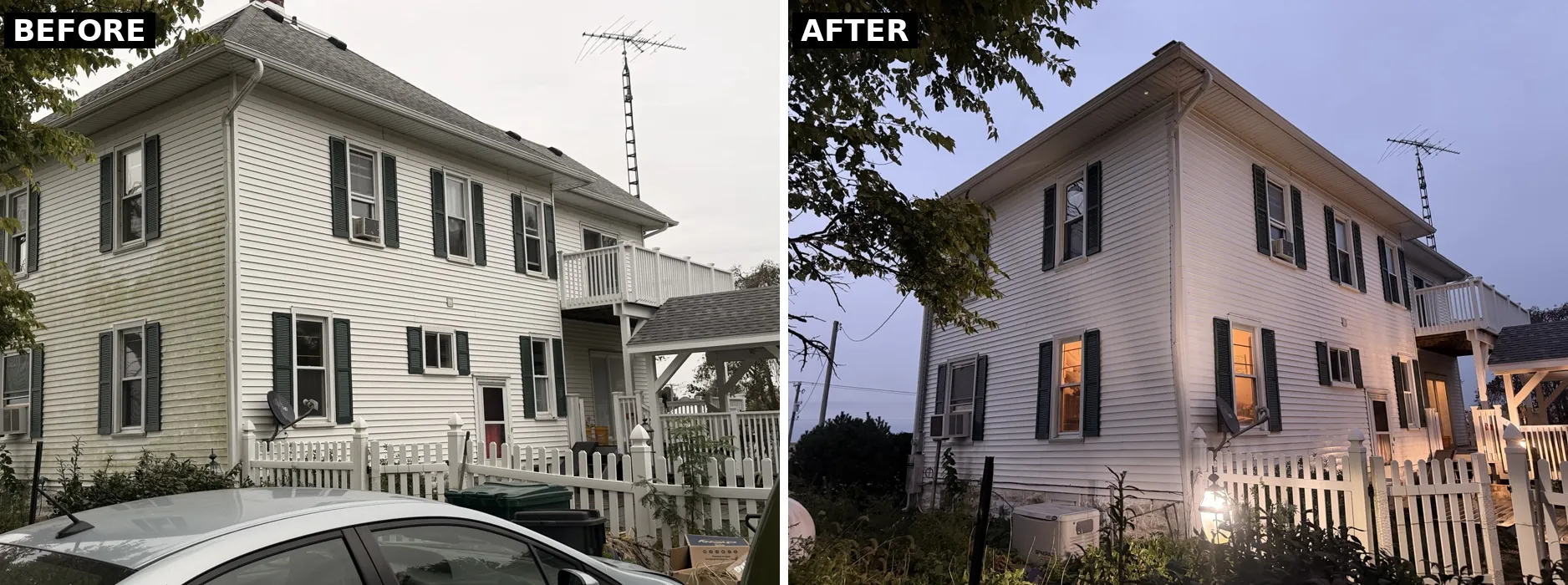
The Home
Lisa's home in Sublette is a classic two-story, farmhouse-style house: white vinyl siding, dark green shutters, a stone foundation and a white picket fence, with an outbuilding sitting beside a large shade tree. It's the kind of home that looks its best when the white siding is truly white.
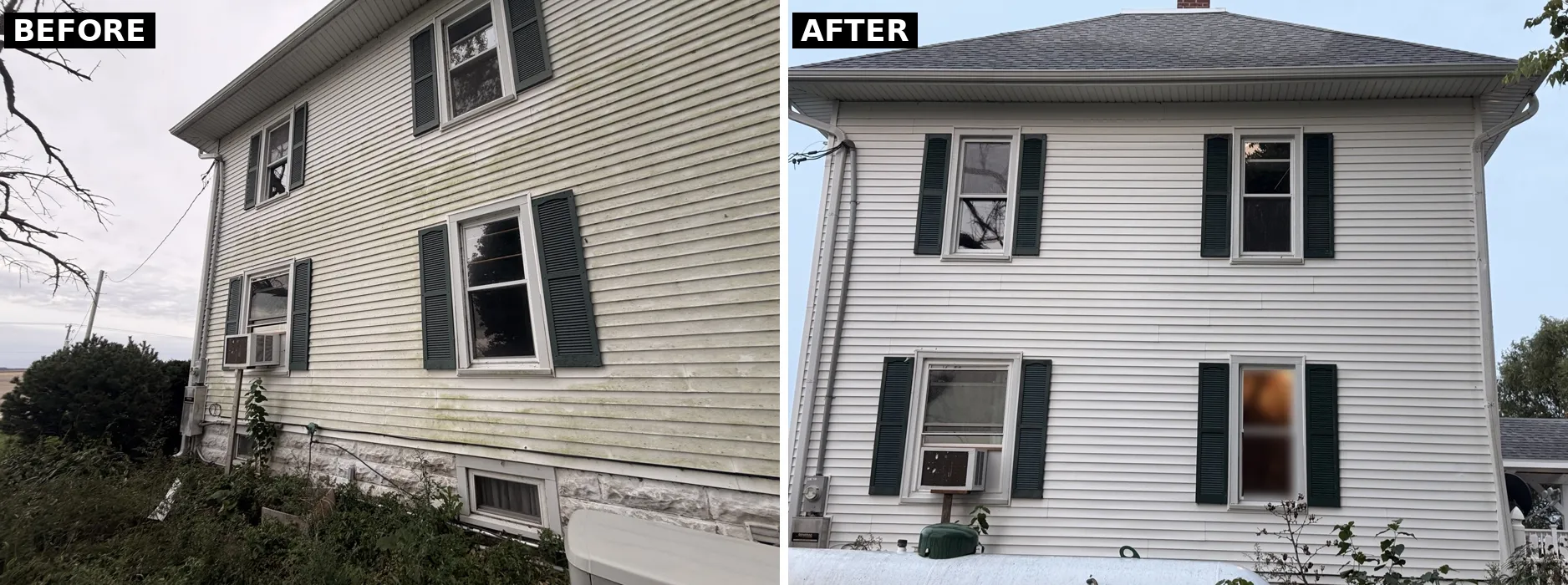
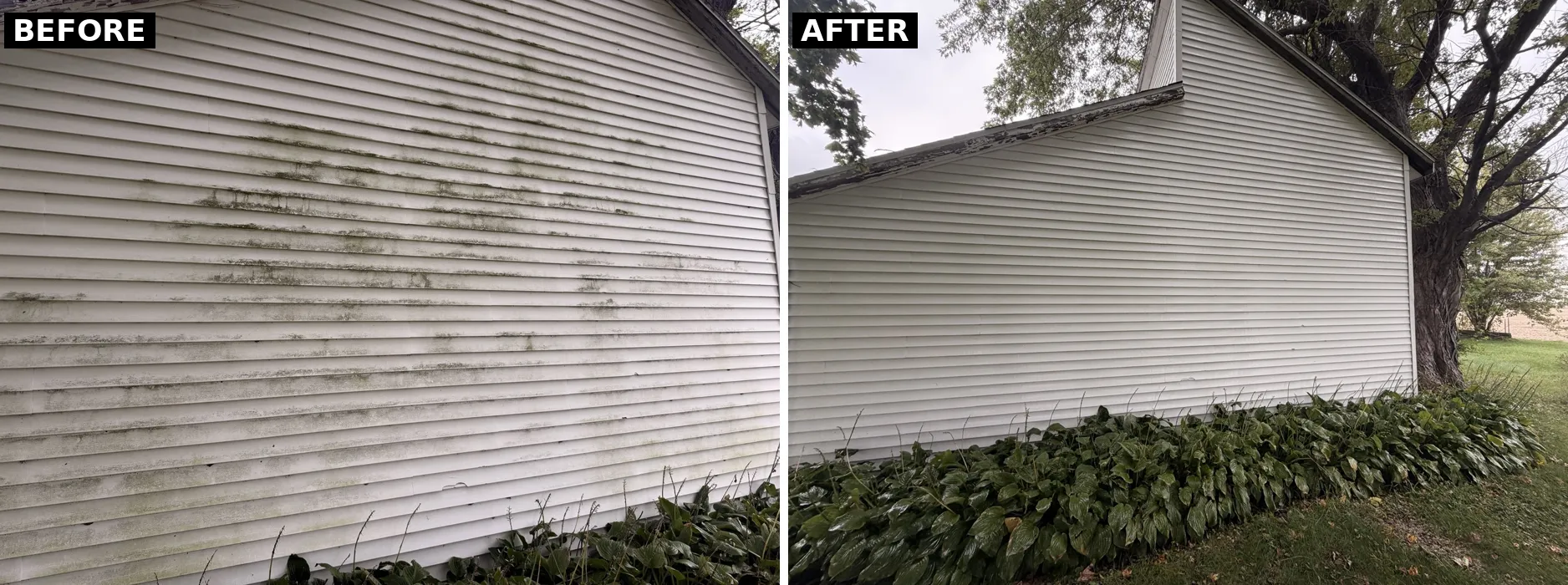
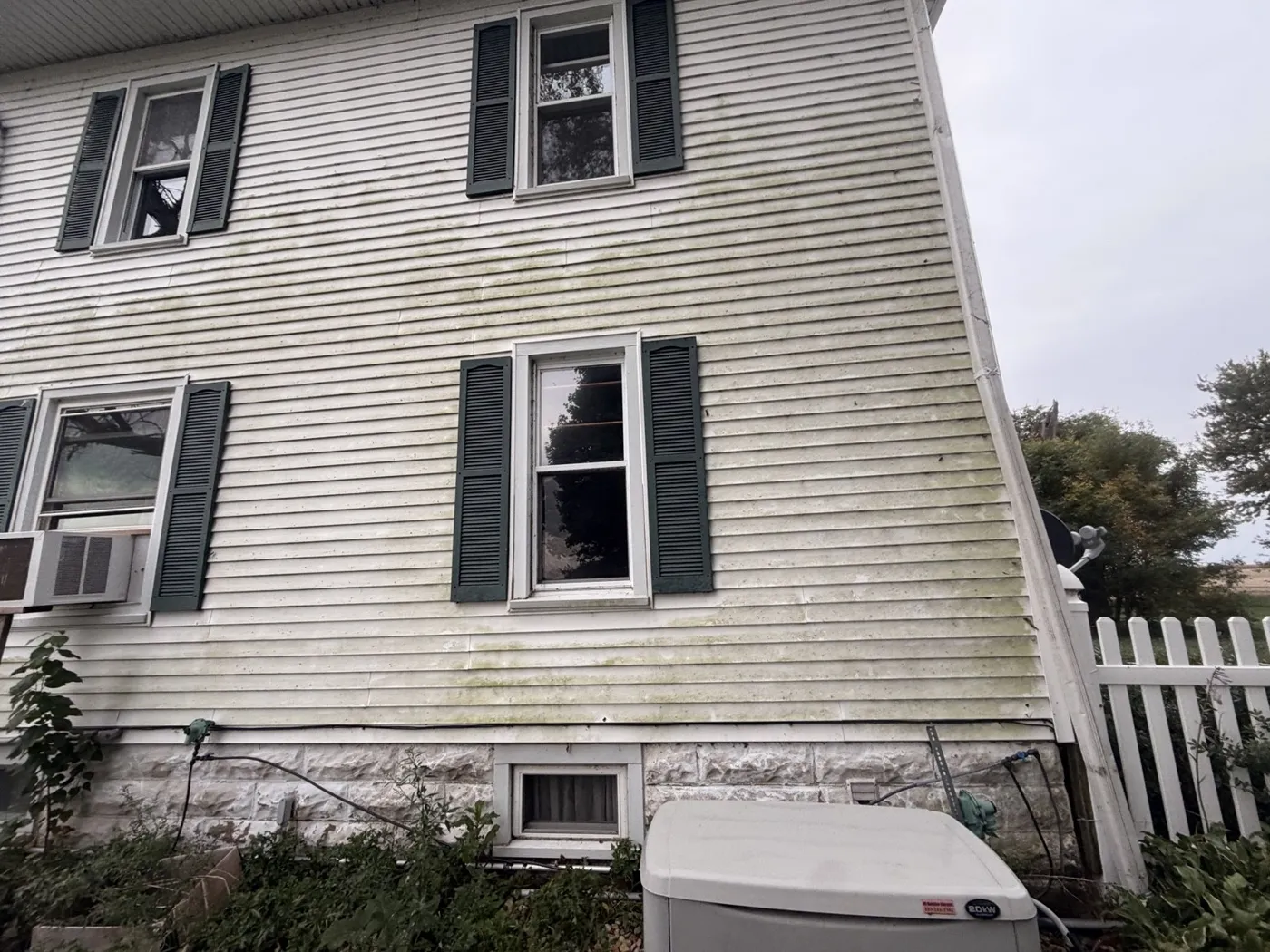
Over time, green algae and black mildew had worked their way into nearly every lap of the siding. The growth was heaviest on the shaded walls of the house and on the outbuilding under the tree, where the siding had turned a dingy green and gray with dark streaks running along the boards.
Why White Siding Turns Green
Algae spores travel through the air and settle on siding everywhere, but they only take hold where the surface stays damp long enough to grow. Around Sublette, there's plenty of that. Morning dew, humid Illinois summers and shade from nearby trees keep walls wet well into the day, and open farm fields let wind carry spores, dust and pollen right up to the house.
The growth collects in the laps of the siding, the small ledge where one board overlaps the next, because water and debris sit there longest. It shows up first on north-facing and tree-shaded walls, and it's most visible on white and light-colored siding like Lisa's. We explain this in more detail in our article, Why Is My Vinyl Siding Turning Green?
Why We Soft Washed Instead of Pressure Washing
A pressure washer might seem like the quick fix, but on vinyl siding it brings real risks. High pressure can crack or warp vinyl, force water behind the panels and into the wall cavities, and damage window seals and shutters. It also tends to knock off only the surface growth, leaving the roots behind, so the green comes back quickly.
Soft washing works differently. We use low pressure and a professional cleaning solution that kills algae, mold and mildew at the root, then rinse the siding clean. The solution does the work, not the force, which is why it's the method we use on every house washing job with vinyl siding.
Our Soft Wash Process, Step by Step
- 1Walkthrough and plant protectionWe walk the property, note windows, shutters, outlets and plant beds, and move or cover anything delicate.
- 2Pre-wet the landscapingPlants, shrubs and lawn near the house are soaked with clean water so they're protected before any solution goes on.
- 3Apply the solution from the bottom upThe professional cleaning solution goes on at low pressure, starting at the bottom of each wall so it covers evenly without streaking.
- 4Let it dwellWe give the solution time to work into the laps of the siding and kill the algae, mold and mildew at the root.
- 5Rinse from the top downA gentle, low-pressure rinse carries the growth and solution down and off the house.
- 6Clean the outbuildingThe same careful process is repeated on the outbuilding siding.
- 7Final plant rinse and walkthroughWe rinse the landscaping one more time and walk the property to make sure everything looks right.
The Results
When we finished, the siding was bright white again, the dark green shutters looked crisp against it, and the stone foundation was clean. The outbuilding's siding came clean too, and the landscaping, including the large hosta beds along the outbuilding, was unharmed. Here are the before and after photos from Lisa's home.
How Long Results Last and How to Keep Siding Clean
Because soft washing kills the growth at the root, the siding stays clean longer than it would after a surface rinse. Even so, algae will eventually return on shaded walls in rural Illinois. Most homes benefit from a soft wash every one to two years. A few simple steps can help stretch that time:
- Trim back branches that shade the siding or touch the house.
- Keep gutters and downspouts flowing so water doesn't spill down the walls.
- Improve airflow near shaded walls by thinning dense shrubs planted tight against the siding.
Live nearby? See our pressure washing and soft washing in Sublette, IL page.
House Soft Washing FAQ
Why is my white vinyl siding turning green?
The green film is almost always algae, often mixed with mildew. Airborne spores land on the siding and grow wherever the surface stays damp, especially in the laps between boards, on shaded or north-facing walls and near trees. White and light siding simply shows it sooner than darker colors.
Is soft washing safe for vinyl siding and shutters?
Yes. Soft washing uses low pressure and a professional cleaning solution, so the solution does the cleaning instead of force. That avoids cracking or warping vinyl, forcing water behind panels or damaging shutters and window seals.
Will soft washing hurt my plants and hostas?
We take care to protect them. We pre-wet plants and landscaping before we start, keep them rinsed while we work and give them a final rinse at the end. At Lisa's home, the large hosta beds along the outbuilding came through just fine.
How often should I soft wash my house in rural Illinois?
Most homes benefit from a soft wash every one to two years. Homes with heavy shade, nearby trees or open fields on one side may need it closer to once a year, while sunny, open lots can often go longer.
Do you serve Sublette and nearby towns?
Yes. We're a mobile service covering Sublette, Amboy, Mendota, Dixon, Sterling, Rock Falls and the surrounding area. Call or request a free estimate to confirm your address.